
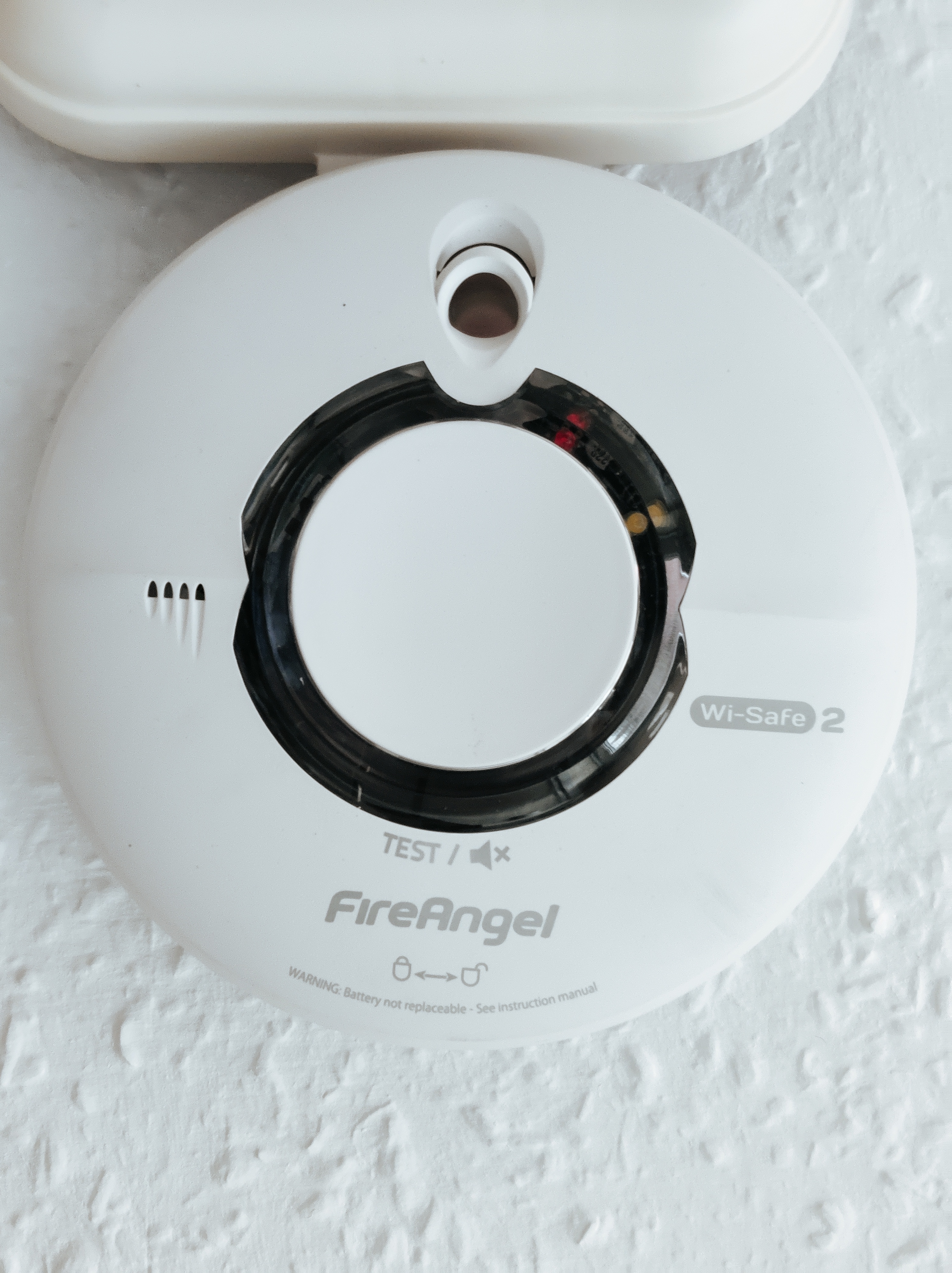
Andy Mabbett · CC BY-SA 4.0

An alarm sounding downstairs is useful only if the people who need the warning can receive it. Interlinking allows compatible alarms to communicate, so an event detected in one part of the home can trigger warnings elsewhere. The design needs to consider bedrooms, escape routes and the people living there, as well as the devices themselves.
It is easy to assume that several similar-looking alarms form a system. They may not. Different models can detect different hazards, and products described as wireless are not automatically compatible with one another.
Three different jobs
Smoke alarms detect smoke. Heat alarms respond to heat and are commonly used in kitchens, where normal cooking can make a smoke alarm unsuitable. Carbon monoxide alarms detect CO, a poisonous gas associated with unsafe combustion. CO is different from carbon dioxide, or CO2.
Some products combine detection functions, but the model specification needs checking. A round device on a ceiling is not proof that a room has both smoke and CO protection. When reviewing an existing installation, identify what each alarm actually does before deciding what is missing.
Wireless describes the link, not necessarily the power
A mains-powered alarm can communicate with other alarms by radio while still needing its mains supply and specified backup. Aico's RadioLINK+ is one example of a system using radio-frequency communication rather than household Wi-Fi. The power supply and the method of interconnection are separate parts of the specification.
A radio link can be useful in an existing home, but it still needs compatible equipment, correct setup and testing at the property. Being able to sound one alarm with its test button is not the same as demonstrating that the linked system works as intended. Ask for that demonstration at handover.
Position and occupants come first
The installer needs to work with the room layout and the manufacturer's siting instructions. Beams, sloping ceilings, obstructions and nearby sources of steam or cooking fumes can affect the choice of position. CO detectors have their own siting requirements; they should not simply be put wherever there is a spare piece of wall.
Mention a planned loft conversion, altered kitchen or change in how rooms are used. Also explain if someone may not hear an ordinary audible warning, or cannot easily reach the alarms for testing. Suitable warning accessories and an accessible maintenance arrangement should be considered at the planning stage.
Rental homes in England
For tenancies covered by England's alarm regulations, a smoke alarm is required on each storey containing living accommodation. A CO alarm is required in a room used as living accommodation containing a fixed combustion appliance, except a gas cooker. Landlords must ensure alarms work at the start of a new tenancy and address reported faults as soon as reasonably practicable.
Those rules do not, by themselves, prescribe the same mains-interlinked arrangement for every rental. Other requirements may apply to the building or its use. A converted property or a house in multiple occupation needs advice appropriate to its circumstances.
Know how to look after the system
Keep the model details, instructions and replacement dates together. Ask how to recognise a fault indication, how often to test and what to do when an alarm reaches the end of its service life. Follow the emergency instructions if an alarm activates; do not treat repeated warnings as something to silence indefinitely.
Wallington Electrical Services can discuss a planned alarm upgrade using a floor plan and details of the equipment already installed. The quotation should explain the detector types, locations, supplies and linking method, with commissioning and a demonstration included in the agreed scope.