
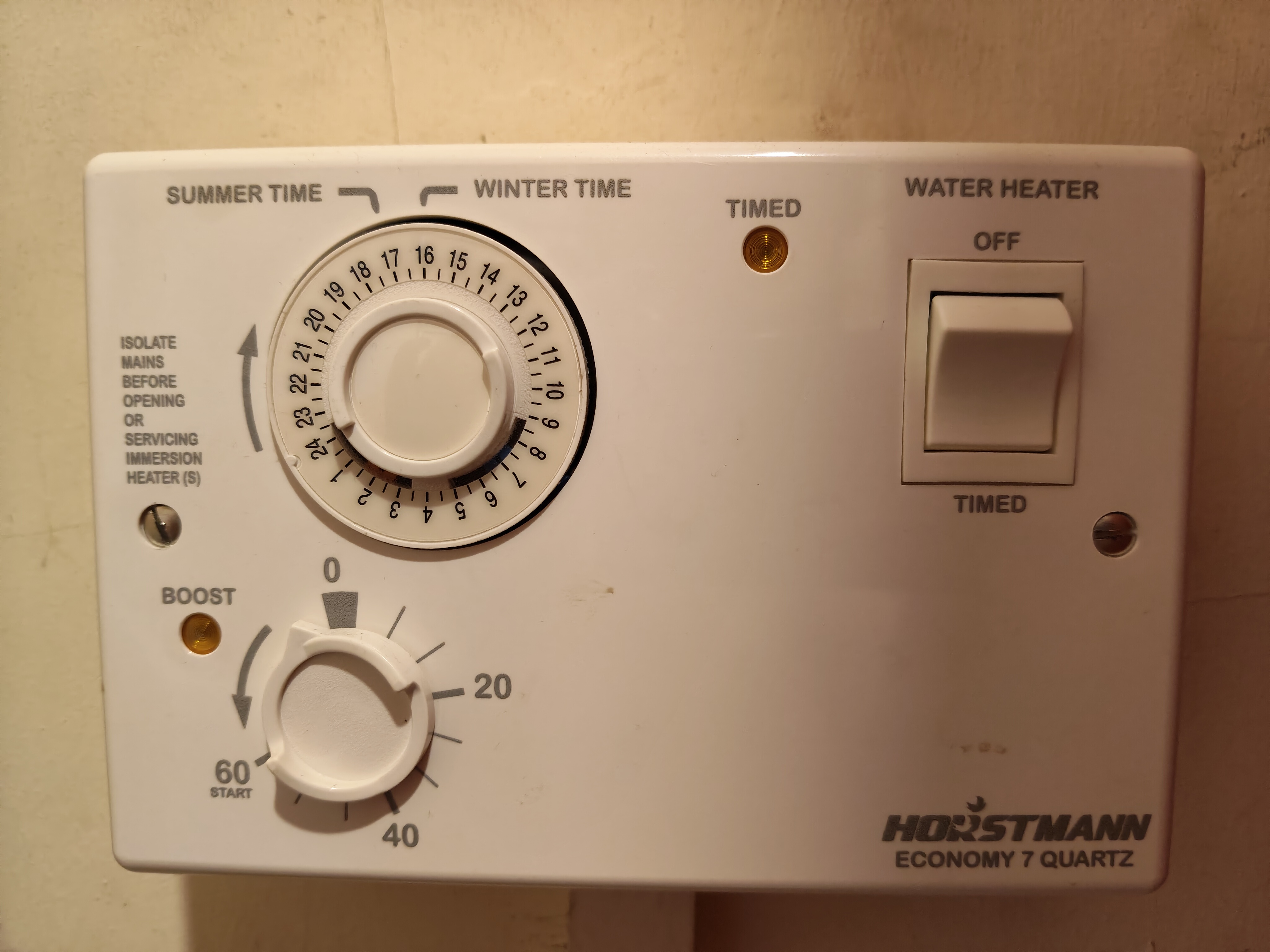
SpicyPhoto · CC0 1.0

An immersion heater control may spend years tucked beside the hot-water cylinder, barely noticed until the water goes cold. A burning smell, crackling noise or discoloured switch is a different matter. Stop using equipment that appears damaged and arrange an investigation; repeatedly switching it on to see whether the fault returns is not a useful test.
The visible accessory is only one part of the system. The heater, cable, connections and protective equipment all need to suit the load. A new switch may be necessary, but a neat replacement faceplate does not, by itself, establish that the underlying problem has been dealt with.
Describe what has changed
You do not need to remove a cover to give an electrician useful information. Say where the control is, when the symptom first appeared and whether it happens during heating, when operating the switch or at another time. Mention visible damage, an unusual smell, a new noise or a control that no longer moves normally.
Some homes have a timer, a boost control and more than one switch. Describe the one you were using instead of guessing which heating element it supplies. A clear photograph of the outside can help identify the arrangement, provided it can be taken without touching damaged equipment or disturbing covers.
Explain whether hot water has stopped completely, becomes available only on boost, or behaves differently from before. Those observations help with fault finding. They do not require you to decide whether the switch, timer, element or wiring is responsible.
Why the connections matter
An immersion heater can draw a substantial load for a sustained period while heating water. A poor connection can produce local heating, and damaged conductors or loose connections can be associated with arcing. The electrician needs to establish the cause and extent of any damage, rather than treating the part visible from the cupboard door as the entire repair.
That assessment also determines which replacement accessory is appropriate. Colour, shape and whether a fitting is described as a spur are not enough to choose it. The heater's rating, circuit arrangement and condition need checking together. An older control should be judged on its condition and suitability for the load, rather than its appearance alone.
Temperature controls are a separate check
The switch supplies or controls electricity; the heater's thermostat controls water temperature. Electrical Safety First has published advice about thermostat failure and the importance of suitable arrangements with an independent safety cut-out. Replacing a wall switch does not confirm that those temperature controls are correct.
If the concern involves overheating water or the cylinder itself, explain that when booking. The work may need coordination between an electrician and the appropriate hot-water specialist. Do not open the cylinder's electrical covers or attempt to adjust unfamiliar controls to compensate for a suspected fault.
Make access and scope clear
The contractor may need to reach the cylinder, its controls and the consumer unit. Mention restricted access, a heavily stored cupboard or previous repairs so the visit can be planned. Ask whether the appointment includes investigation and how any additional work will be agreed once the fault is understood.
If you rent the property, report the symptoms promptly to the landlord or managing agent rather than waiting for a routine inspection. For a homeowner enquiry to Wallington Electrical Services, the location of the control and a straightforward description of what has changed are enough to begin. You do not need to diagnose the fault before asking for help.