
Pavel Danilyuk · Pexels licence
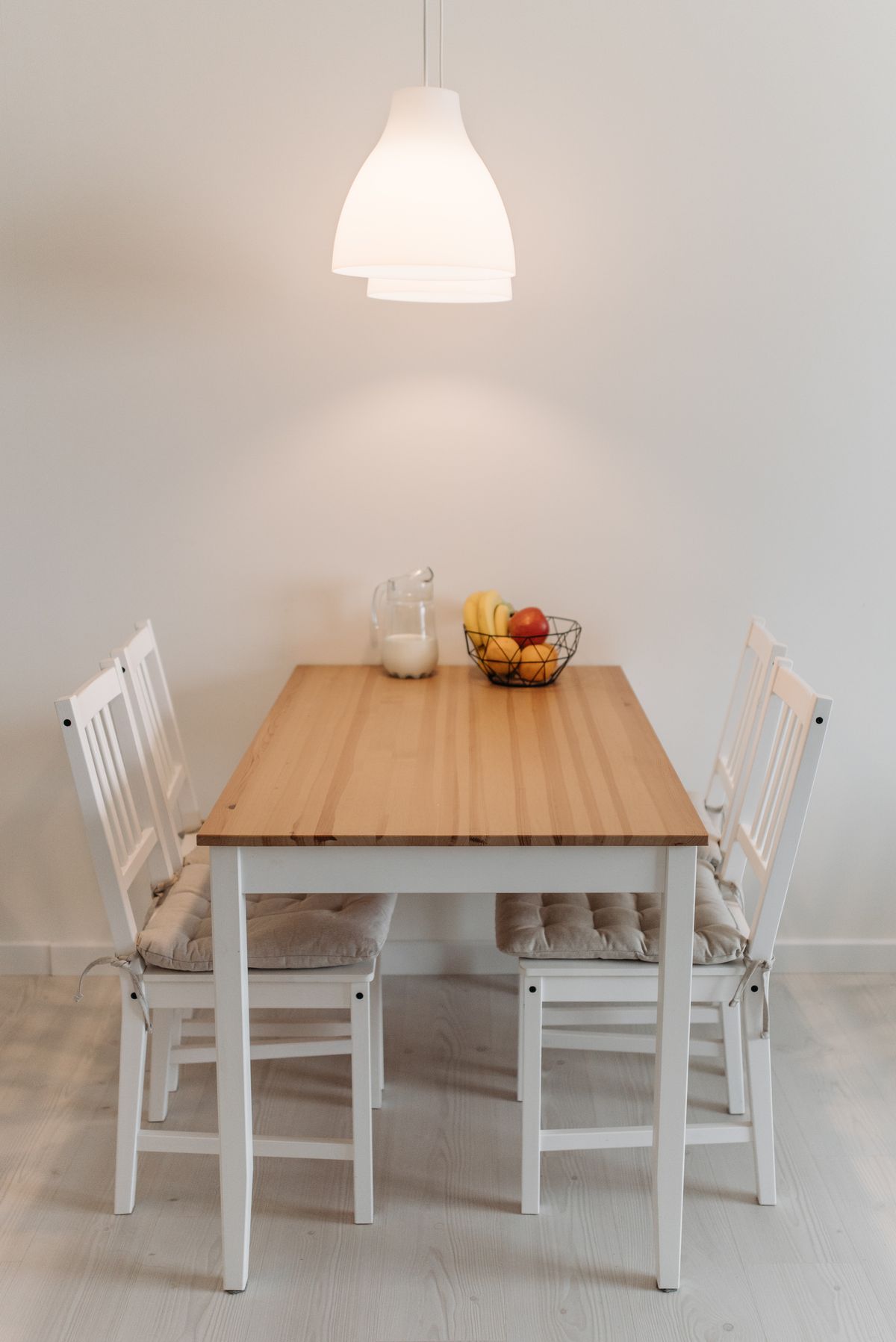
A room can have plenty of lights and still be awkward to use. A bright fitting behind you may leave the kitchen worktop in shadow. A pendant centred on the ceiling can look misplaced once the dining table arrives. Planning starts with where people sit, cook, read and move through the space.
Choose the layout before committing to a basket of fittings. A rough floor plan with furniture marked on it often explains more than a collection of photographs of attractive rooms.
Put light where the work happens
General lighting helps you move around the room. Task lighting puts useful light onto activities such as chopping food or reading. Accent lighting draws attention to a feature. These can work together, but there is no need to turn every room into a complicated scheme.
In a kitchen, consider the preparation surfaces as well as the floor. In a living room, think about reading positions and whether a bright source will be reflected in the television. An open-plan room may need different arrangements for cooking, eating and relaxing, even though those activities share the same ceiling.
Mark furniture that is likely to stay and furniture that may move. A carefully placed pendant is less forgiving of a relocated dining table than a more flexible arrangement. These are useful decisions to make while cable routes and switch positions are still being discussed.
Separate brightness from colour
For LED lamps, lumens describe light output; watts describe electricity consumption. Comparing watts alone can therefore be misleading when choosing brightness. The fitting's shape and direction also affect where the light goes, so a lumen figure cannot replace considering the room.
Colour temperature describes the appearance of white light. Energy Saving Trust gives roughly 2,700–3,000 kelvin as warm white and 4,000–4,500 kelvin as cool white. Neither is automatically right for an entire house. Consider the decoration, adjacent rooms and how you use the space, and view a sample where practical before buying a large quantity.
Plan what switches on together
Imagine entering the room with shopping, preparing a meal, clearing up and sitting down later. Which lights would you want at each stage? That helps decide what should be controlled separately and where the switches need to be reached.
Dimming can give flexibility without adding more fittings. Smart controls may suit some households, but ordinary day-to-day use still needs to be straightforward. Visitors should be able to turn on useful light, and everyone living there should understand the controls without relying on one person's phone.
An LED being labelled dimmable is not a guarantee that it will work with any dimmer. The lamp or driver, dimmer and connected load need to be compatible. Check the manufacturer's information before ordering equipment independently; flicker or poor low-level adjustment is easier to prevent than resolve after decorating.
Think beyond installation day
Ask how lamps or drivers will be replaced and whether the fitting needs to come out to reach them. With integrated products, establish what can be serviced and what a future replacement would involve. Keep model references and warranty information, particularly where several identical fittings are installed.
Agree who supplies the equipment and who deals with an unsuitable or faulty product. Include making good and decorating in the conversation if new cables or positions are involved. Those practical details affect the finished job as much as the appearance of the fitting.
For lighting work with Wallington Electrical Services, explain what you dislike about the current arrangement and bring the furniture layout alongside any style references. We can use that brief to discuss positions, controls and suitable equipment before the work and price are agreed.