
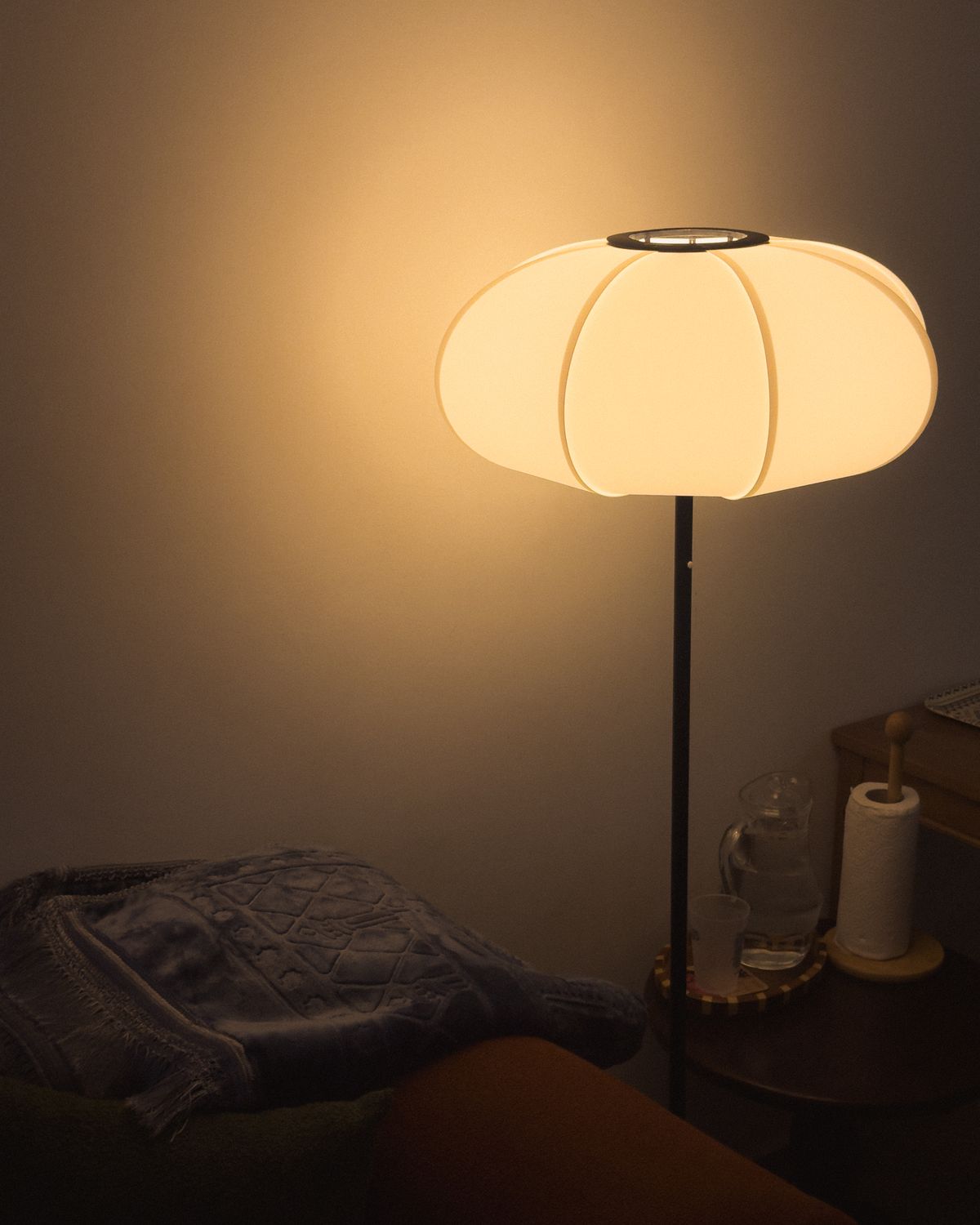
Hassan Bouamoud · Pexels licence
A single ceiling light can make a living room bright enough to walk through while leaving it uncomfortable for everything else. Reading may still be difficult, the television may catch a reflection, and the whole room can feel too exposed when you just want a quiet evening.
Begin with the seats
Mark the sofa, armchairs and television on a simple plan. Add the places where somebody reads, does craft work or occasionally uses a laptop. These positions matter more than making the ceiling arrangement perfectly symmetrical.
A reading light needs to help the person using it without shining into somebody else's face. A lamp beside a chair also needs a sensible power source. If the only socket is behind a large sofa, switching and access can become a daily nuisance rather than a small detail.
Give different activities different options
General light, focused task light and a softer background can work together. You do not need to buy all three from an expensive matching collection. The useful part is being able to choose an appropriate combination for the activity.
For example, a central fitting may be useful for cleaning or finding something, while wall lights or lamps provide a more comfortable evening setting. The exact arrangement depends on the room. A small sitting room may need only a few carefully chosen sources rather than a long list of fittings.
Watch reflections and glare
Look at the proposed positions from the sofa, not only from the doorway. A bare light source in the normal line of sight can be distracting. So can a bright reflection on a television screen or glass-fronted picture.
Photographs can suggest a mood but do not show every viewing angle. If a fitting is a significant purchase, ask about a sample or a sensible way to assess it before committing. Describe any existing lighting you find uncomfortable so the same problem is not recreated in a different style.
Plan switching and sockets together
Would you like the main light controllable from more than one entrance? Should wall lights operate separately? Do you want to reach a lamp switch without moving furniture? Those are ordinary practical questions, not reasons you must install a complicated smart-home system.
Smart controls can offer additional options, but traditional controls may meet the brief. The priority is that everyone in the household can use the room easily. If an app is involved, agree what remains possible using familiar physical controls.
Before decorating, decide whether new wall-light supplies or socket positions are needed. It is much easier to coordinate routes before the walls are finished than after the furniture has arrived. Final light fittings can follow the preparation work.
Before deciding, try the room with its different lights switched on separately. Notice where you naturally sit and which surfaces reflect the light. This gives you a practical brief: the armchair needs reading light, for example, while the television area needs less direct brightness.
When you speak to Wallington Electrical Services, bring a furniture sketch and a description of how the room changes throughout the day. We can discuss practical electrical alterations around that plan, helping you create choices rather than replacing one overpowering ceiling light with another.