
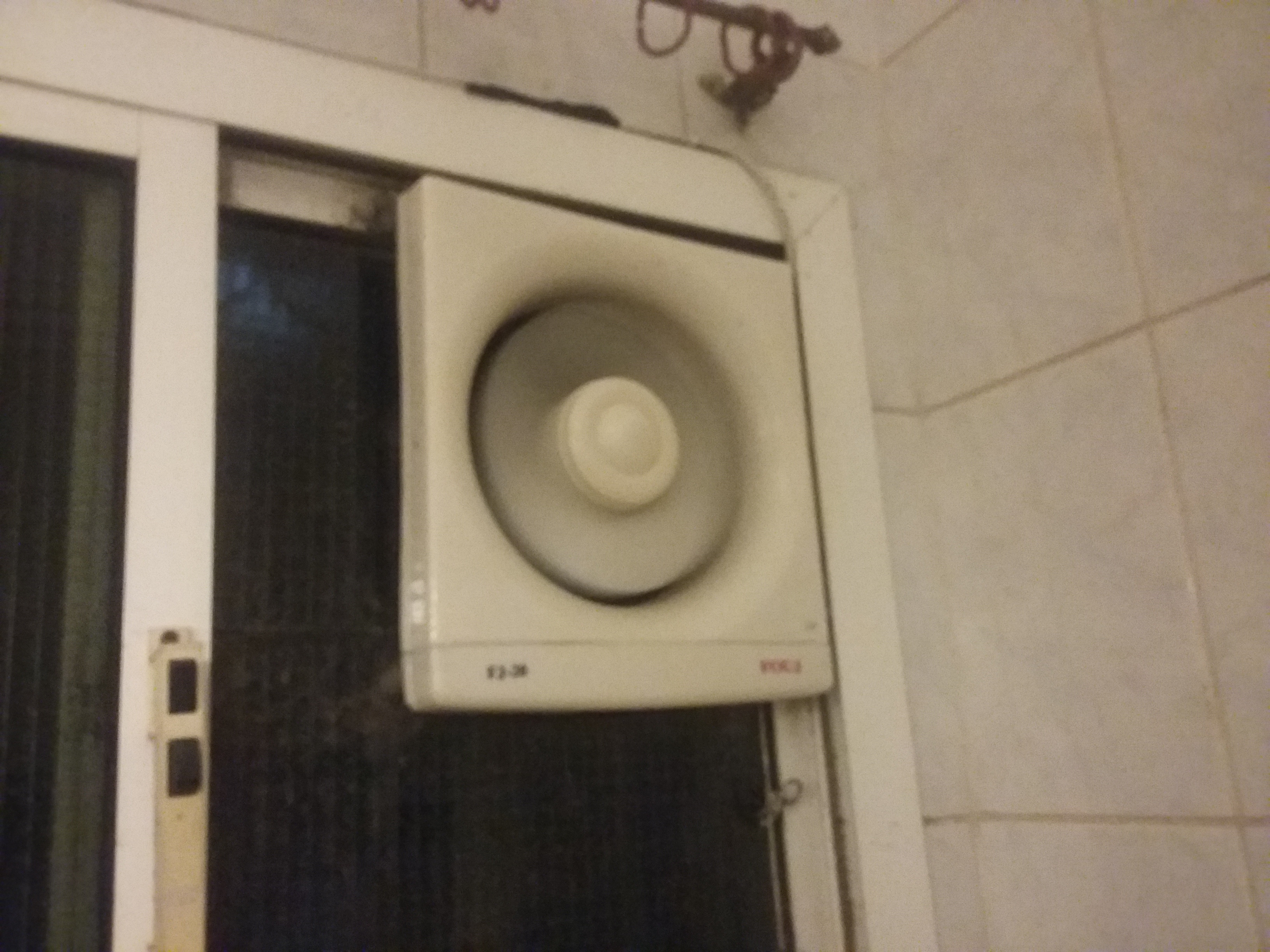
Rina120 · Public domain

It can be. A bathroom fan may be designed to carry on for a time after the light goes off. Some fans also respond to humidity, and others run quietly in the background with a faster speed when needed. The best clue is how your fan usually behaves. A new noise, a change in running time or a fan that suddenly never slows down gives you something specific to investigate.
Work out what the fan is doing
Note whether it starts with the light, comes on after a shower even with the light off, or seems to run at a steady low speed all day. Time one ordinary cycle. If the fan continues after someone uses the bathroom and stops after about the same interval each time, a run-on timer is one possible explanation. If the time varies with how steamy the room is, a humidity setting could be involved. These patterns are clues. The manufacturer’s instructions for your model are the best guide.
You might hear a boost speed during a shower and a much quieter speed later. On a fan designed to ventilate continuously, that lower speed can be part of normal operation. An unfamiliar fan in a house you have just moved into is worth identifying before you assume it is wasting energy or needs switching off. Keep a note of any model number or setting instructions you can read without taking it apart.
Notice what has changed in the room
A fan that used to stop quickly may run for longer when more people are showering, when the bathroom stays steamy for longer or after ventilation elsewhere in the house changes. Write down whether the run time changed after a replacement fan, a new light switch or decorating. A fan that runs for a long time and still leaves the room steamy may need its airflow and duct route checked. Run time alone does not tell you how much air it is moving.
Listen for a new rattle or scrape, especially if the fan sounds different at the same setting. Report visible damage, water near the equipment or a burning smell promptly and keep clear of suspect equipment. Leave electrical covers and internal adjustment screws for someone qualified to inspect the fan. Some controls are intended for the user and others are accessible only during installation.
Bring a useful description to the visit
“After a shower the fan used to slow down after ten minutes. This week it has stayed loud for an hour even after the mirror cleared” gives someone a useful place to begin. “It has always hummed quietly and speeds up when we shower” is a different report. Include the make and model if you know them, and say if the outside grille is accessible from ground level or the duct goes into a loft.
Ask the installer to show which controls you can use, what the normal speeds sound like and how the fan should be looked after. If it was chosen to provide background ventilation, make sure everyone who uses the room knows how it behaves. A clear handover can prevent an ordinary run-on cycle from being mistaken for a fault later.
If you are unsure whether a fan is running as designed, tell Wallington Electrical Services the model if you know it, how long it runs and what triggers it. That will help us discuss whether the controls or the fan need checking.