
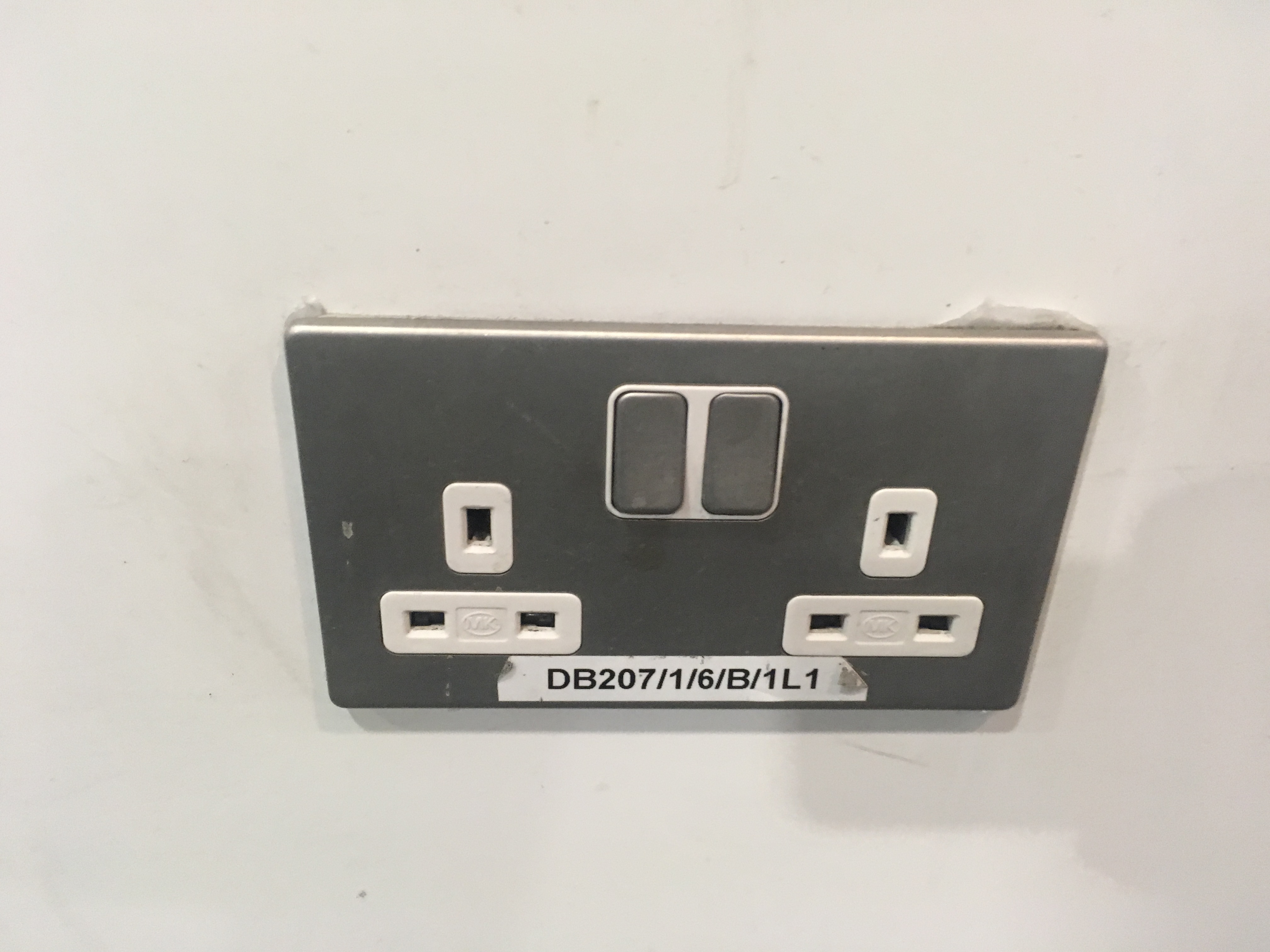
Eric Fischer · CC BY 2.0

A single socket can often be replaced with a double in the same part of the wall. What makes the difference is the box behind it, the condition of the wiring and what you want to plug in. A second place to plug in a lamp is a different brief from finding a permanent supply for two large appliances. Explain what the socket will be used for before deciding on the fitting.
What is behind the existing socket?
A conventional double socket normally needs a wider box than a single. In a plasterboard wall there may be room to enlarge the opening, although a stud directly beside the existing socket could get in the way. In a brick wall, a flush fitting can mean cutting into the masonry. Wallpaper, tiles and splashbacks make the finished edge more important because the old opening may be difficult to repair invisibly.
A suitable conversion socket may fit over a single box and project a little farther from the wall. A surface-mounted double is another possibility where avoiding a larger hole matters. Ask to see how far either option would stand out if it sits behind a desk, near a wardrobe or next to a door frame. A few millimetres can matter if you plan to leave furniture close to the wall with a plug inserted.
What do you want to run from it?
Tell the electrician what will actually be plugged in. Two phone chargers and a floor lamp put a different demand on the installation from a tumble dryer and a portable heater. A double socket gives you two outlets. The circuit and its protection still need to be suitable for the proposed use. An electrician can assess this and advise if the appliances would be better served elsewhere.
If the existing face is loose, has brown marks or smells burnt, report that when you book and stop using it. The job may need to deal with damage behind the socket or a problem with the plug as well. A new faceplate cannot tell you whether the concealed wiring is sound. The electrician should be able to explain any additional work once the socket has been inspected safely.
Settle the finish before agreeing the price
Send a photo of the closed socket and another that shows the surrounding wall. Mention tiles, old plaster, nearby trim and how close furniture needs to sit. If you want the new socket to match others in the room, send a photo of those too. White moulded, metal and flat-plate fittings can need different amounts of space behind the face.
Ask whether the price assumes the existing box can stay, what happens if the wiring needs attention and who makes good the wall. You might decide to put the second outlet nearer the appliance instead. For example, two sockets at opposite ends of a long worktop may be easier to live with than a double in a corner where neither cable reaches comfortably. If you already know the proposed use and the finish you want, an electrician can give a more useful answer than a price based on the front of the existing socket alone.
If you want more sockets, show Wallington Electrical Services the existing fitting and explain what you need to plug in. We can discuss whether a double in the same position or an extra socket elsewhere would work better.