
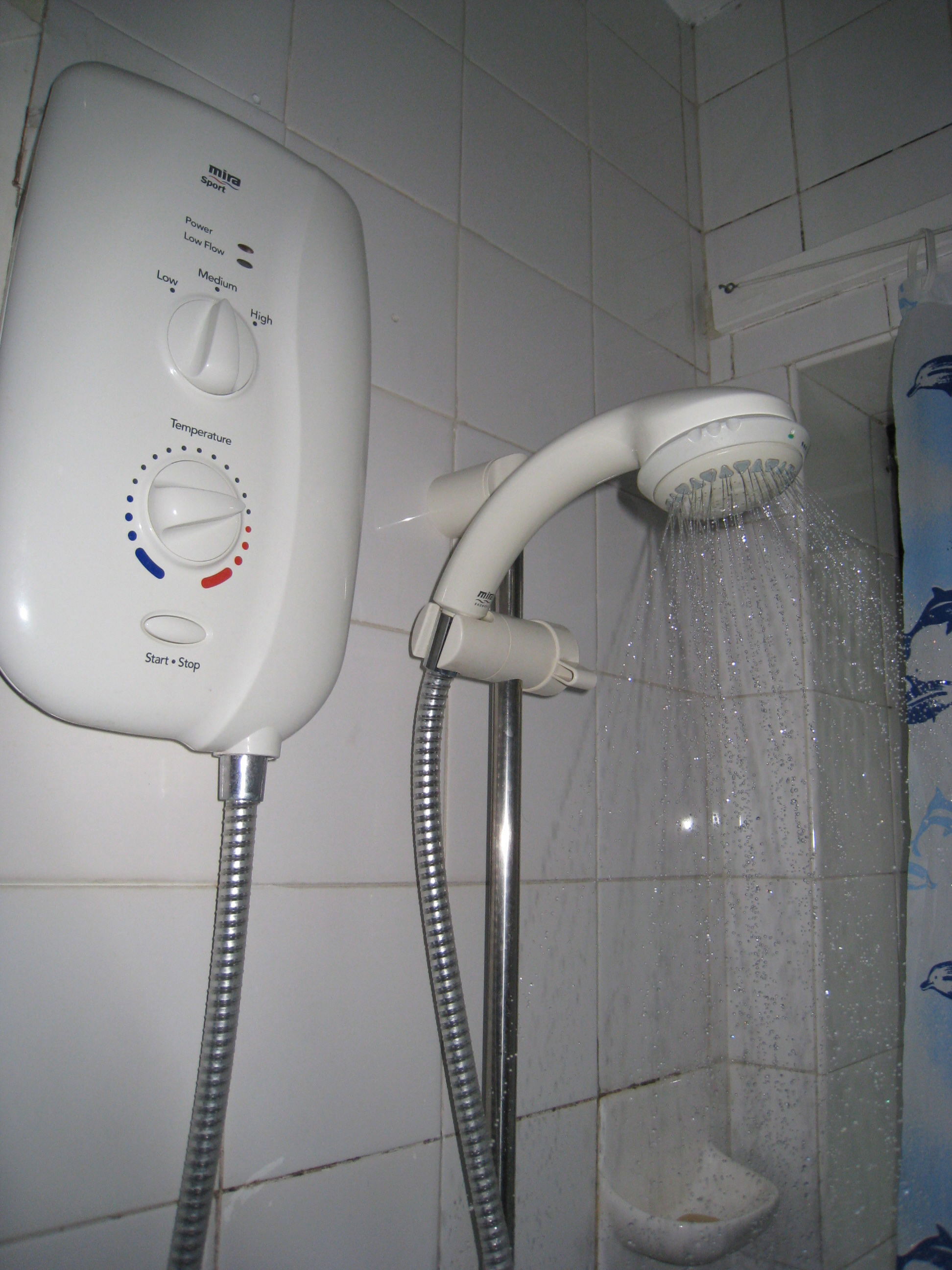
Alan-Cottey-W-M · CC BY-SA 3.0

If you are replacing an electric shower, start with the exact model and power rating of the old unit and the one you are considering. A new unit may look the same and still place a different demand on the circuit. An electric shower heats water as it flows through the unit, so the electrical supply and the cold water supply both need checking. Get those checks done before ordering a more powerful model or booking a fitter.
Find out what is already in place
Look for the old model in the instructions or purchase paperwork. If its rating is visible from outside the casing, note it down without opening anything. The number printed on a pull switch or breaker cannot establish that the whole circuit is suitable. An electrician may need to check the cable, how it is installed, its protection and the condition of the existing connection. Tell them if the switch has become stiff, hot or discoloured, or if the shower has started tripping.
An older installation may have a cable route that is difficult to see or access. Say whether the bathroom ceiling is below a loft, if there is an airing cupboard nearby and whether the consumer unit is a long way from the shower. If the proposed shower is moving to another wall, the route matters even when the old unit is being replaced with something similar. A new or altered supply can affect the programme and what gets disturbed in other rooms.
Check how the shower connects to the plumbing
Find the manufacturer's requirements for the water feed and the available pressure and flow. The person fitting it will also need to know where the pipe enters the old unit. A replacement that accepts the pipe and cable from the right places may reduce work behind the tiles. An apparently tidy swap can become more involved if a new casing leaves old fixing holes visible or the water entry position changes.
When discussing the job, make clear which type of shower you have. A mixer shower uses the property's hot and cold water supplies, while an electric shower heats its own feed. A pumped shower is another arrangement. A retailer's product name can be confusing, so use the model instructions and ask the installer which connections are present. If you want a different type, arrange for the plumbing and electrical implications to be considered together.
Coordinate the work before the bathroom is finished
Agree who supplies the shower, who checks the existing circuit, and who fits and commissions it. If tiling is under way, mark the agreed cable and pipe locations before they are covered. Ask what will happen if inspection shows the circuit or its protection needs changing. In England, ask the electrician whether the work requires Building Regulations notification and which records you will receive. The answer depends on the work being done.
Send a wide photo of the shower and its controls, the proposed model number and details of any renovation. Say whether it is the only working shower so you can plan around downtime. At handover, keep the manufacturer's instructions and any electrical paperwork together. If the old shower has been overheating or tripping, keep it out of use while you arrange the check.
If you are replacing an electric shower, give Wallington Electrical Services the old and new model numbers if you have them. We can discuss what needs checking before you buy a replacement or agree an installation date.