
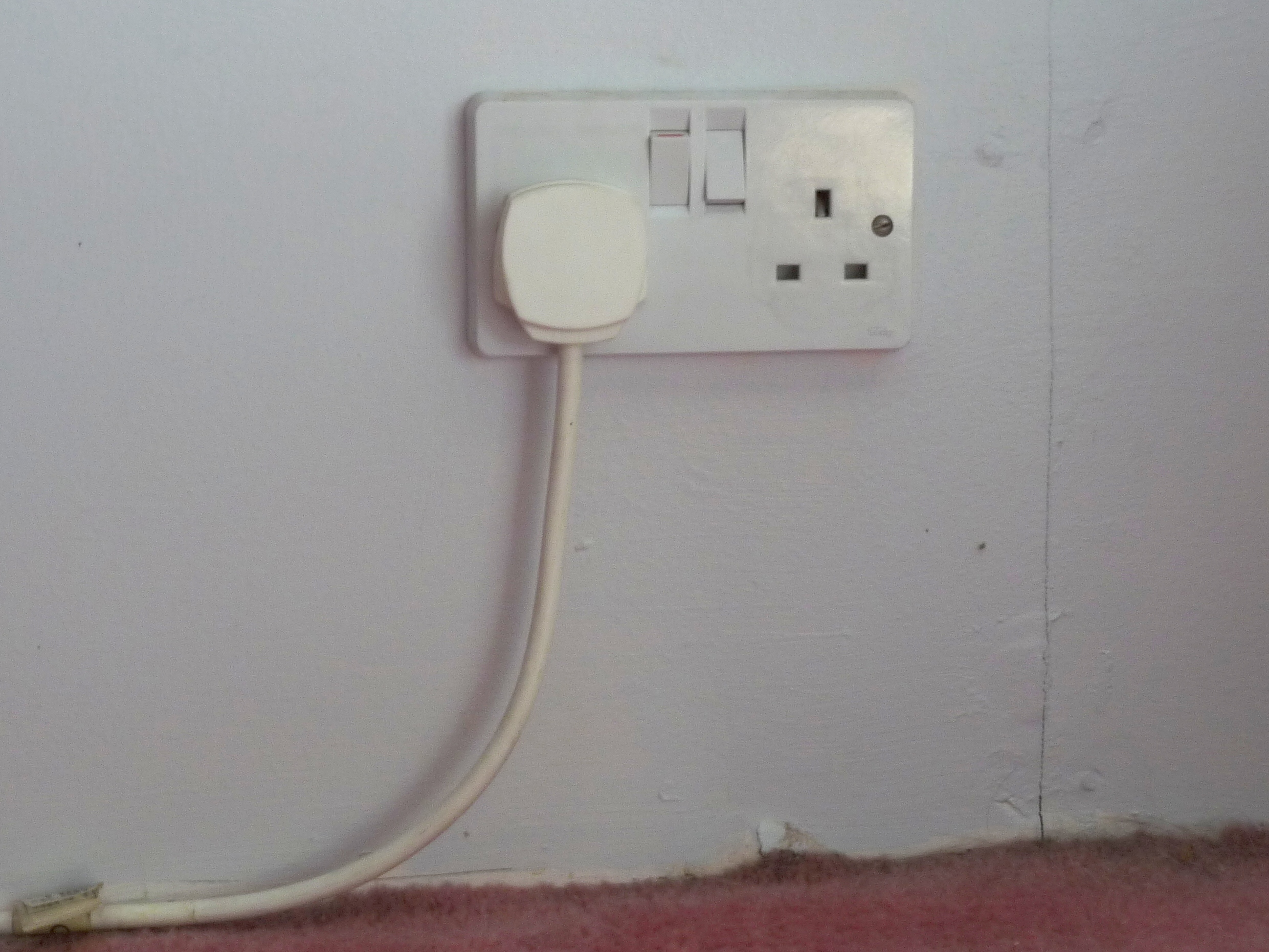
Thryduulf · CC BY 3.0

Stop using a socket if it is unusually hot, smells burnt, crackles, shows brown marks or looks melted. Arrange an urgent check by an electrician. If there is smoke or fire, get out, stay out and call 999 from safety. A socket can still supply power while something is overheating, so a working appliance does not make the situation safe.
Keep clear of damaged equipment
A hot or damaged plug may be difficult to remove, and a socket face may be distorted or loose. Avoid touching damaged or unusually hot parts. Do not pull at the flex, insert anything into the socket or take the front off to look inside. If there is an obvious hazard and you are unsure what can safely be switched off, keep people away and get urgent advice.
A smell can be hard to place. It may seem to come from a socket when the plug, the extension lead or the appliance is the source. Leave all the suspect items out of use until the cause is checked. Avoid moving them to a different socket to see whether the smell follows. If the affected outlet is behind a machine or a piece of heavy furniture, describe its location without moving anything that would bring you close to a damaged connection.
What to tell the electrician
Say which appliance was in use, whether it plugs directly into the wall and how long it had been running. A heater used for several hours, a plug that began crackling as it was inserted and a socket that warmed up with nothing plugged in are different observations. If there was an extension or adapter, say what else it was supplying. Mention whether the mark or smell appeared suddenly or has been getting worse.
A photo from a safe distance can help identify the type of socket and its location. It cannot show the state of a hidden connection. If getting a picture means moving a hot plug, reaching behind an appliance or delaying urgent action, skip it. A clear description over the phone is enough to arrange the first response.
Ask what was found before using it again
The investigation may need to cover the plug, the socket and the wiring around it. Replacing a visibly marked front is only part of the job if damage extends beyond it. Ask what was affected and whether the appliance or its lead should also be checked before it is used again. If another socket is fed from the same area or is also damaged, let the electrician know rather than assuming it is a separate issue.
For a rented home, tell the landlord or letting agent where the socket is and that there are signs of overheating. Use the emergency contact if the fault requires urgent attention. A useful message is “The socket behind the tumble dryer smells burnt and there is a brown mark near the plug. I have stopped using it.” Include whether anyone can provide access. If the situation develops into smoke or a fire, leave and call 999 before dealing with tenancy messages or arranging an appointment.
If you need a damaged socket assessed, tell Wallington Electrical Services what you noticed, when it happened and what had been plugged in. We can discuss the next step using what you already know.