
Max Vakhtbovych [2EyesProd.] · Pexels licence
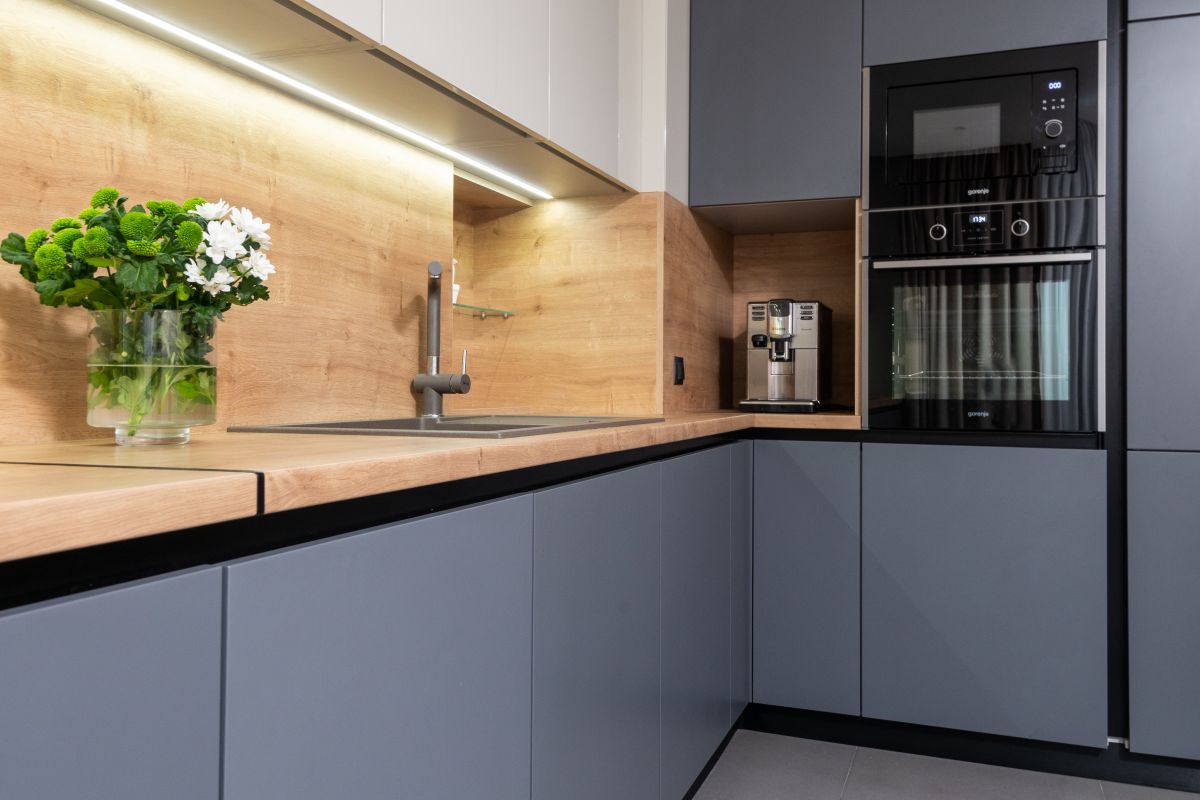
Under-cabinet lighting can make a kitchen more useful without changing its overall appearance very much. It can also disappoint if the light is patchy, the strip is visible from the dining table or a component is buried where nobody can reach it.
Decide what the light is for
Start with the working surface. Are you trying to improve food preparation, add a softer evening light, or do both? The answer affects position, output and controls. A decorative glow and practical task lighting are related, but they are not always the same requirement.
Look at where you stand and where people sit nearby. A light source tucked beneath a cupboard may be hidden from someone at the worktop but clearly visible from a low chair across the room. The room needs considering from more than one height.
Compare the whole arrangement
Continuous lighting can give a different appearance from separate fittings. Joinery details, cupboard lengths and interruptions such as an extractor influence what will look deliberate. Ask how corners and gaps will be handled rather than judging a product from one short showroom section.
The worktop finish matters as well. Reflective surfaces can make individual points or bright lines more noticeable. A diffuser or different position may change the effect, but it is better to assess the proposed combination than to assume every strip gives the same result.
Leave a way to maintain it
Some systems use separate drivers and other components. Agree where these will be installed and how they can be reached. A kitchen should not require unnecessary damage to finished cupboards when a replaceable component eventually needs attention.
Ask who will supply the lighting and who will fit the physical parts to the furniture. Clear responsibility is especially helpful when the kitchen supplier, fitter and electrician are different businesses. Keep the product information with your kitchen paperwork for future maintenance.
Make switching fit your routine
You may want cabinet lights independently controlled from the main ceiling lighting. That can allow a useful low-key setting when the cooking is finished. Whether dimming is worthwhile depends on the chosen equipment and the effect you want.
If you are buying the lights yourself, check the control requirements before ordering. An item sold as a lighting kit may not include everything needed for your intended installation. The electrician needs the specification, not just a product photograph or a link showing the colour of the fitting.
Plan before the splashback is finished
New supplies and switches are easier to coordinate before tiling, plastering and decoration. Retrofitting may still be possible, but access and the existing kitchen construction affect what is involved. Make that part of the quotation conversation rather than assuming the work is purely cosmetic.
Confirm who will supply the driver, controls and any connecting components. Buying only the visible strip can leave important parts unspecified. Ask where those components will live and how they can be replaced later without dismantling the fitted kitchen.
Bring a cupboard plan and photographs of the worktop area to Wallington Electrical Services. A useful discussion will cover the light you need, the controls you prefer and how the installation will be maintained, as well as how it looks on the day it is fitted.