
Jakub Żerdzicki · Unsplash licence
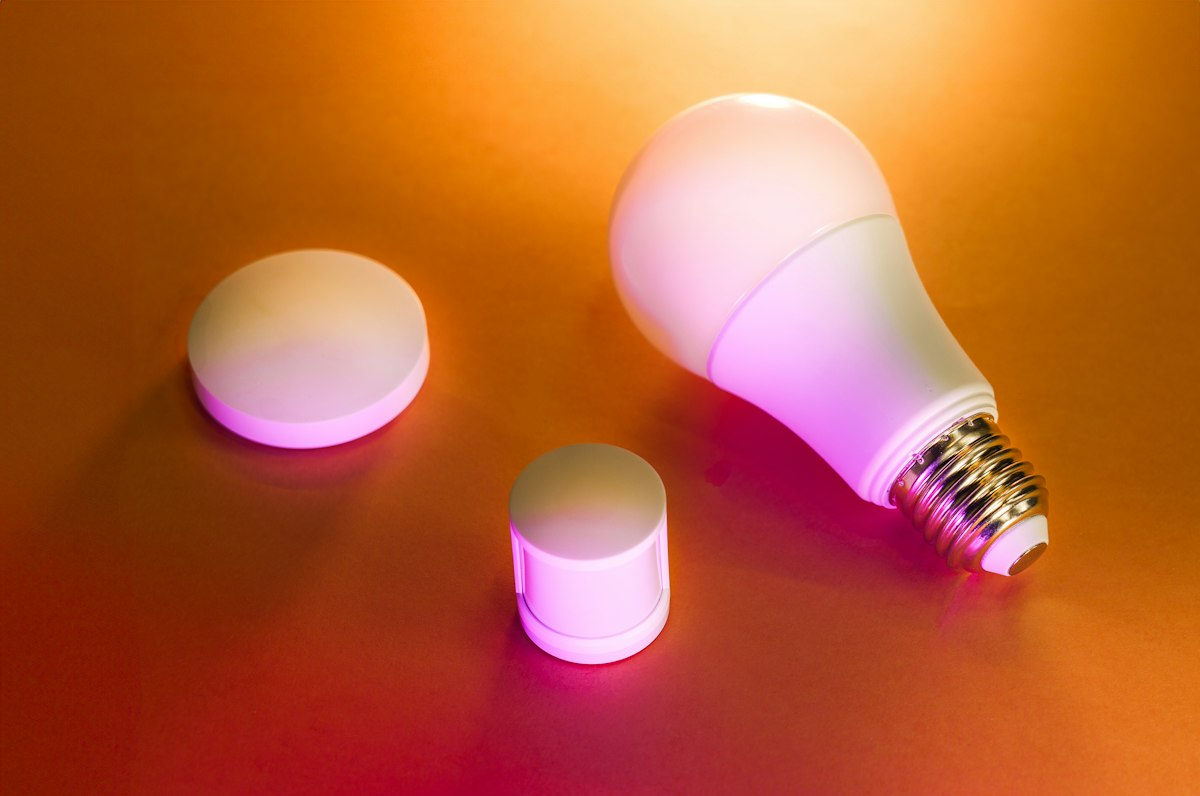
Smart lighting can start with something as small as a lamp in the corner. Before you buy a box of connected bulbs, though, it is worth deciding how you want the room to work when somebody reaches for the wall switch. That everyday action often reveals which approach will suit you.
Start with control, not the shopping basket
A smart bulb puts connected features into the lamp itself. A smart switch or control changes how a circuit or group of lights is operated. There are variations within both approaches, so the product details matter. Neither description guarantees a particular feature, installation method or level of compatibility.
Imagine a visitor entering the room. Can they get useful light without your phone? What happens if someone turns off the ordinary switch supplying a connected lamp? The answer should be understood before the household starts arguing about which switch must be left alone.
Where individual lamps make sense
If you want to experiment with colour or different settings in a few table lamps, connected bulbs may be a convenient starting point. You can assess whether you actually enjoy the features before making a larger commitment. Check the fitting, size and product requirements rather than assuming every lamp will suit every shade.
Replacing numerous bulbs throughout a house is a different decision. Think about replacement costs, appearance, controls and whether the same features are necessary everywhere. A utility room and a living room do not automatically need identical technology.
Where a wall control may be preferable
Some households want the lights to feel familiar, with extra flexibility available in the background. A suitable wall-based system may support that approach. Whether it can be fitted to your existing installation needs assessment: wiring, space, lamp compatibility and the chosen system all matter.
This is electrical work, not simply an app purchase. If you are planning changes to fixed controls, provide the installer with the actual product specification. Products described similarly online may have different requirements, particularly where listings come from different countries.
Count the less obvious costs
Look beyond the first device. Does the arrangement need a hub, additional controls or subscriptions for the features you want? What happens when a phone changes, the internet fails or the manufacturer stops supporting an older product? Ask those questions before you have committed every room to one approach.
A good comparison also includes the cost of doing nothing complicated. Sometimes separate ordinary controls or a suitable dimmer solve the original annoyance. Smart lighting is worthwhile when it improves the way the room works, not simply because it adds another way to turn a light on.
Try to describe a normal evening in one sentence: you want the main light off and two lamps dimmed while watching television, for example. That is enough to begin comparing approaches. It is more useful than collecting devices first and searching for a reason to connect them afterwards.
For a renovation, settle the intended control arrangement before decorating. For a small experiment, choose one genuinely useful situation and live with it first. Discuss fixed-wiring changes with Wallington Electrical Services, then select equipment that fits both the installation and the people using it.