
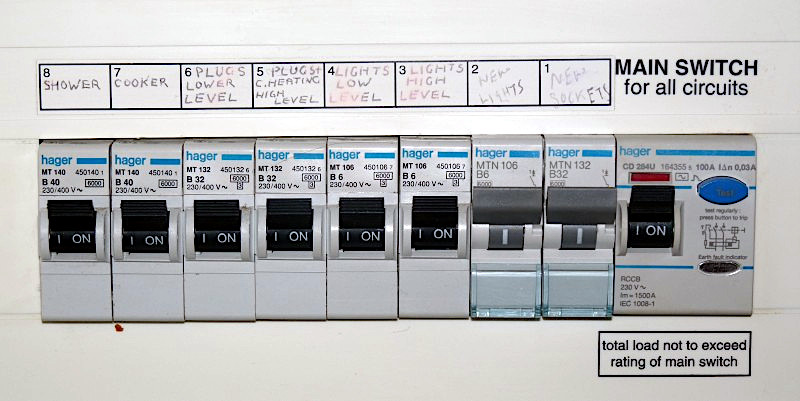
Pfnicholls; white balance and sharpening by MikeRun · CC BY-SA 4.0

Moving a consumer unit, often called a fuse board, can be part of a sensible renovation. Perhaps a cupboard is being removed, the board is difficult to reach or the proposed layout needs the wall space. The new position still has to work for the electrical installation, not just for the furniture plan.
Explain why you want it moved before settling on a location. Seeing the existing equipment, cable routes and planned building work lets an electrician assess the options and the disruption involved.
Under-stairs boards and the escape route
In many older homes, the fuse board is beneath the stairs. A fire in this position could affect the route people upstairs need to escape. The IET highlights the potentially more severe consequences of a consumer-unit fire where the board is on an escape route, including under the stairs. During a full rewire, we recommend relocating an under-stairs consumer unit to a more suitable position where practicable, taking account of fire safety, access and cable routes. This is a recommendation based on assessing the property, rather than a claim that every under-stairs installation is prohibited or must be moved.
The board, meter and incoming supply
These are different pieces of equipment with different responsibilities. UK Power Networks distinguishes consumer-unit work by an electrician from meter relocation through the energy supplier and moving the incoming supply through the network operator.
Moving the board does not automatically require the meter to move. Equally, a quotation to relocate the consumer unit should not be assumed to include changes to equipment belonging to the supplier or network operator. If more than one organisation is involved, agree who is arranging each part and how the appointments fit together.
A short distance may still mean substantial work
The existing circuits need suitable routes and connections to the relocated board. Two positions that look close on a plan may be separated by awkward construction or inaccessible spaces. Walls being removed and floors being lifted can create opportunities, but the sequence needs agreeing before the other trades finish.
The installation's condition matters too. Assessment before consumer-unit work includes earthing and bonding and the suitability of existing circuits. Dangerous defects cannot simply be reconnected and left because the main request was to move a box. Findings may change the scope and need explaining before additional work is agreed.
Plan for the finished room
Show the electrician proposed cupboards, shelving and furniture, not only the empty space available today. The board needs suitable access for operation, inspection and maintenance once the renovation is complete. Mention any accessibility needs and discuss covers or enclosures before ordering the joinery.
Talk through the power interruption as well. Explain if a loss of supply creates particular difficulties, and establish how long access to the work area is likely to be needed. A relocation should not be assumed to fit into one short visit without assessing the actual work.
What belongs in the quotation?
Clarify whether the proposal relocates the existing board or includes a new one, how circuits will be extended or rerouted, and which inspection, testing and completion documents are included. Agree responsibility for making good walls or floors and identify any supplier or network charges separately.
For a relocation enquiry with Wallington Electrical Services, send the reason for the move, photographs of the current position and a sketch of the proposed layout. These can start the discussion, with a site assessment where needed to turn the preferred position into a properly planned job.