
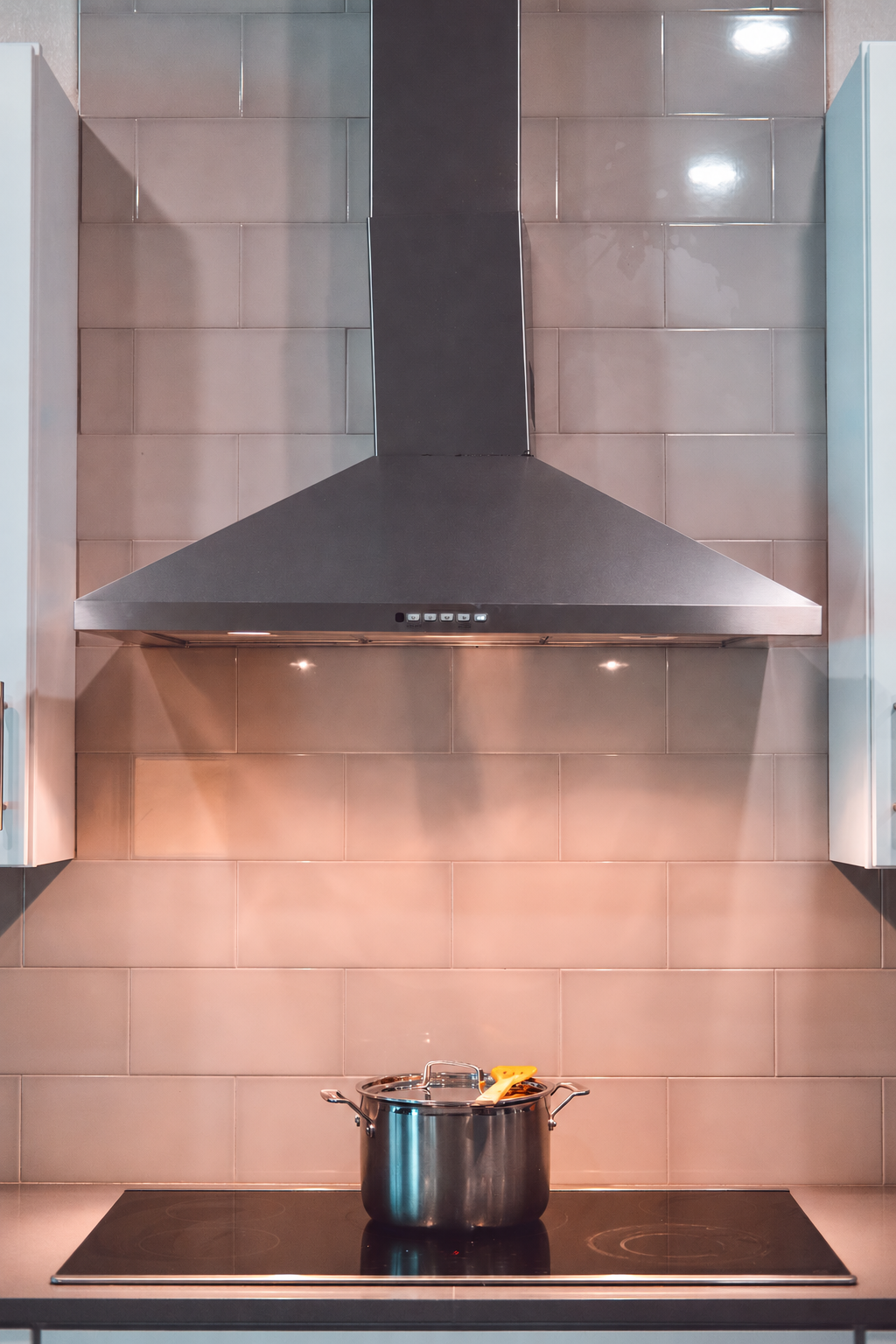
Connor Scott McManus · Pexels licence
A cooker hood can look right above the hob and still be the wrong choice for the room. Before choosing its finish, establish whether it will discharge outdoors or recirculate air through filters. That decision affects the building work, maintenance and what the hood can achieve.
Understand the two arrangements
A ducted hood carries extracted air outside through a suitable route. A recirculating hood filters air and returns it to the room. Manufacturer guidance, including Bosch's explanation of the two systems, distinguishes their treatment of cooking odours and moisture; recirculation should not be assumed to remove moisture from the home.
Check the specification for the actual model. Some products need a separate recirculation kit or particular filters. The display model in a showroom may not include everything needed for your proposed installation, so compare complete arrangements rather than the appliance price alone.
Find the route before ordering the kitchen
For a ducted system, discuss the route, outlet and access with the kitchen designer and installer. Beams, cupboards and ceiling arrangements can affect what is practical. An attractive drawing with no extraction route marked leaves an important part of the design unresolved.
Agree the manufacturer's requirements and who will carry out the building work. Do not assume an existing duct is appropriate for a different appliance. If the kitchen moves to another part of the room, review extraction at the same time as power, plumbing and lighting.
Think about noise in the finished room
An open-plan kitchen may share space with conversation, television or home working. Ask about sound at the settings you are likely to use, not only the quietest setting advertised. Installation details also matter, so discuss the whole arrangement rather than choosing by a single number.
Controls should be reachable and understandable. If the hood is awkward to use, it may be left off during ordinary cooking. Think about the people using it and whether the proposed height and control position work for them, while respecting installation requirements.
Leave room for maintenance
Grease filters need the care specified by the manufacturer, and recirculation filters may require replacement or other maintenance. Ask how often this is expected, what it involves and whether replacement parts are readily available. Include that ongoing cost in the choice.
Check access before enclosing the appliance in joinery. It should be possible to maintain and eventually replace it without unnecessary damage to the kitchen. A concealed installation still needs a practical route for servicing.
Coordinate the electrical work
The electrical provision and any accessible isolation need to suit the chosen appliance and installation. Give the electrician the model details early, including any changes made after the original kitchen plan. Avoid leaving this until cupboards have been fitted around an assumed connection point.
Wallington Electrical Services can coordinate the electrical part with your kitchen installer, with ductwork and wider ventilation responsibilities agreed separately. Settle those boundaries before decorating. The best-looking hood is only a good purchase if its installation and everyday operation work for the kitchen you actually have.