
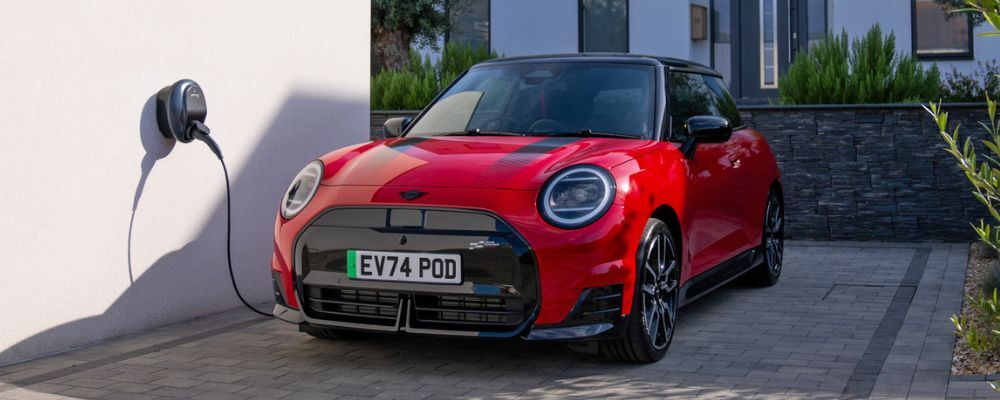
David T at Pod Point · CC BY-SA 4.0

Ordering a home charger before checking the property can leave important decisions until too late. Parking, the electricity supply, cable route and the way you use the car all affect the installation. Start with those practical details, then compare products that suit the agreed arrangement.
Look at where the car actually parks
Mark the usual parking position and charging-port location. Think about reversing in, a future vehicle and whether the cable would cross a route people use. An installation should not depend on trailing a cable across public space without an appropriate authorised arrangement.
If you rent or share the building or parking area, establish the relevant permissions before ordering. A space that you normally use is not necessarily yours to alter. Ask the property owner or managing agent about the process and make the responsibilities clear.
Have the electrical arrangements assessed
The installer needs to check the existing supply and installation. A nearby consumer unit or unused-looking space in it does not settle suitability. Tell them about electric heating, other large equipment and any planned heat pump or battery system.
The relevant distribution network operator may need notification or approval through the applicable process. Ask who handles that and whether any supply work is needed before installation. Do not arrange changes to service equipment yourself; responsibilities extend beyond the charger's installer in some cases.
Choose controls around your routine
Consider when the car is normally at home and when it must be ready. Smart charging can help schedule use, but settings need to work with the vehicle, charger and electricity tariff. Energy Saving Trust's guidance explains why charging arrangements and timing deserve attention alongside the hardware.
Ask how to override a schedule when plans change, what happens without internet access and whether any subscription is involved. Keep control of the account and understand which company supports the app, charger and installation.
Compare a complete installation
Check whether the quotation includes the intended cable route, necessary electrical work, commissioning and documentation. A standard-installation headline may rely on conditions your property does not meet. Provide photographs and information, then confirm what still needs an on-site assessment.
For a tethered or untethered choice, think about handling and storing the cable rather than appearance alone. Ask about access for maintenance and the product warranty. An attractive enclosure is not a substitute for dependable support if something stops working.
Include the rest of the household
A charger is part of a wider electrical installation. Discuss how demand will be managed and what happens when other equipment is operating. Do not assume the fastest advertised charging rate will always be available or necessary for your routine.
Before the installer leaves, practise starting a charge and changing the schedule yourself. Keep the support details and account recovery information accessible. A demonstration using the installer's phone alone does not show that your own setup is ready for everyday use.
Contact Wallington Electrical Services to discuss the electrical assessment and confirm the installation scope available for your property. Bring the vehicle details, parking plan and any future energy projects. If you are already renovating or resurfacing a driveway, have that conversation early so routes can be coordinated before the final finish makes them harder to change.