
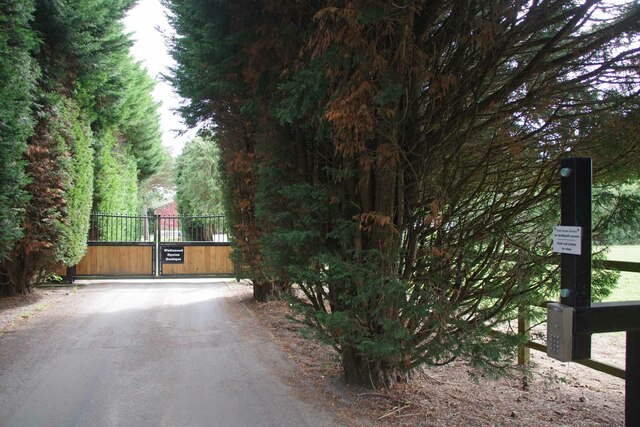
Glyn Baker · CC BY-SA 2.0
A finished driveway is an expensive place to discover that the gate needs another cable route. Power, communication, controls and the gate itself should be planned together before paving starts. Even if automation is a later project, the decisions you make now can affect the options available.
Treat the gate as a complete system
Powered gates are moving machinery. HSE guidance makes clear that proper design, installation and maintenance matter because of the risk of serious injury. Providing an electrical supply is only one part of the work; it does not establish that the gate system is safe.
Appoint someone competent to take responsibility for the gate installation and its safety assessment. Agree how that specialist will coordinate with the electrician and driveway contractor. Avoid a situation where each trade assumes another is dealing with the controls or protective features.
Think through everyday access
Who arrives on foot, by car or with a bicycle? Where will visitors stand when using the intercom? Can a delivery driver reach it without blocking the pavement or being in the gate's path? These are practical design questions to settle before choosing a polished entrance panel.
Consider how children, visitors and anyone with limited mobility will use the entrance. A separate pedestrian route may form part of the discussion. The right arrangement depends on the site, rather than on copying a gate seen at another house.
Decide how you want to answer
An intercom might ring an indoor unit, a phone or both. Ask what happens if the internet is down, a mobile is unavailable or the person answering has poor reception. Find out whether any subscription or ongoing service is required.
If there is a camera, consider its view and privacy. It should serve the entrance purpose without unnecessarily taking in neighbouring spaces. Check how recordings, accounts and access permissions are managed, and who will own the system after installation.
Coordinate the routes
Give the contractors the final positions of gate equipment, intercom, internal controls and any related lighting. Discuss future access for maintenance as well as the initial cable route. A connection that can only be reached by lifting new paving is an avoidable complication if it is considered early.
Do not specify ducts or cables independently from the system design. The installers should confirm what is required, how it will be installed and how the route will be recorded. Electrical and communication provisions need to suit the actual equipment chosen.
Ask for a proper handover
Before relying on the system, have the installer demonstrate normal operation, the relevant safety features and what to do during a fault or power failure. Understand any manual release procedure and keep the necessary instructions accessible to the people who may need them.
Ask about maintenance, inspections and support, with responsibilities in writing. Wallington Electrical Services can discuss the agreed electrical provision, while specialist gate design and commissioning must be explicitly allocated. Planning early is worthwhile, but it is not a reason to separate a power connection from the rest of a safety-critical installation.