
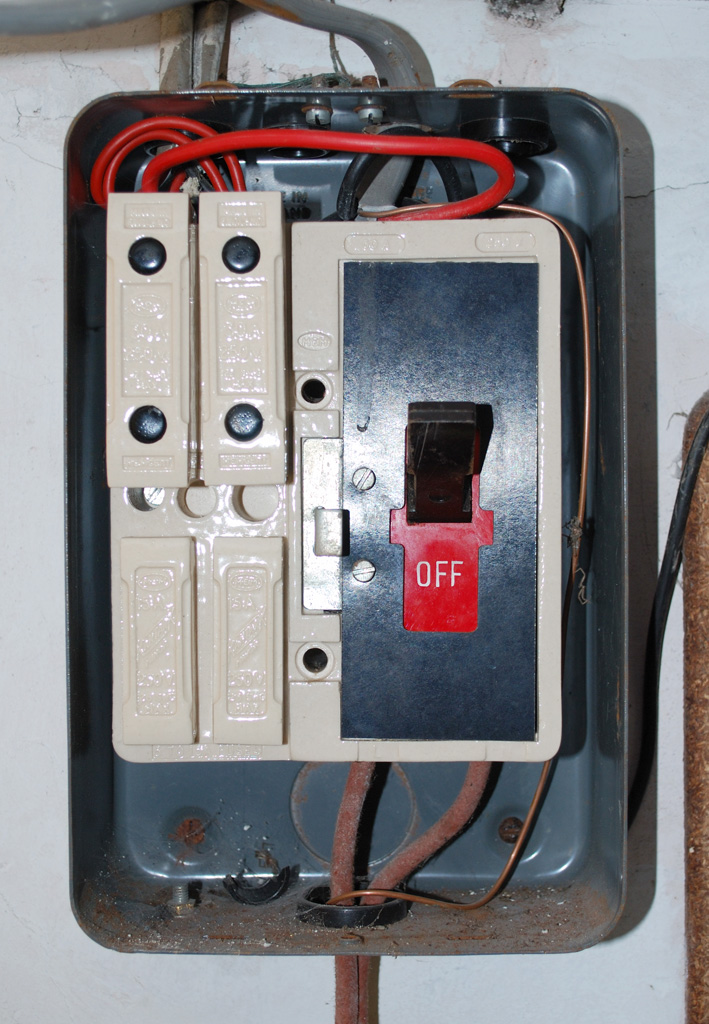
Anihl · Public domain (released by photographer)


Finding old-looking switches does not tell you whether a house needs a full rewire. Nor does a new consumer unit prove that all the wiring is in good condition. The decision should follow an assessment of the installation, its condition and the changes you want to make.
Separate condition from convenience
You may need more sockets or better lighting without needing every cable replaced. Equally, a house that seems convenient can still have defects requiring attention. Make two lists: concerns about the existing installation and improvements you would like.
Include tripping, visible damage, previous alterations and any available certificates or reports. Do not open equipment to investigate. An electrician can use the information to plan an appropriate inspection and explain what can and cannot be established from it.
Ask what the evidence shows
An Electrical Installation Condition Report records findings from inspection and testing within its stated scope and limitations. It is not the same as a quick glance at accessories. If a full rewire is recommended, ask which findings support that recommendation and what alternatives have been considered.
There may be circumstances where targeted remedial work is appropriate, and others where extensive replacement makes more sense. The answer depends on the property. A blanket rule based only on its age can miss important differences in previous work, condition and accessibility.
Consider the renovation programme
If floors are already coming up and walls are being opened, some work may be less disruptive now than later. Tell the electrician about kitchens, bathrooms, extensions and planned decoration. It can be sensible to coordinate improvements even where an immediate full rewire is not required.
That is a discussion about practical timing, not a reason to replace sound equipment indiscriminately. Ask for essential work, recommended improvements and optional additions to be identified clearly. You should be able to see why each part is proposed.
Understand what replacement includes
A rewire quotation needs an agreed layout and scope. Numbers and positions of sockets, lighting controls, data provisions and other equipment affect the work. Making good, decoration and moving furniture may be separate responsibilities.
Ask what existing equipment will remain and how it will be assessed. If work is phased, discuss how old and new parts will be managed safely and what disruption to expect at each stage. Avoid assuming that a phased approach automatically costs less overall.
Make the decision before decorating
It is frustrating to finish a room and then discover that the electrical plan requires disturbance. Arrange the assessment early enough to consider the options without a decorator waiting for an answer. Keep the report and quotation together so the agreed work can be traced back to the findings.
Ask for the reasons behind the recommendation to be written down, particularly when comparing different proposals. That allows you to distinguish a finding about condition from an optional improvement or a decision driven by access during renovation.
A report and a design are different documents
An assessment of the existing installation helps establish its condition. A new layout describes what you want the house to do. You may need both, but they should not be confused. A satisfactory finding about an existing circuit does not decide where new sockets should go, and a beautifully drawn plan does not establish that the existing wiring is suitable.
When discussing the options, ask for a clear division between remedial work arising from findings and changes driven by your preferences. That helps you prioritise spending without losing sight of either safety or practicality. It also gives you a better basis for comparing a targeted proposal with a more extensive renovation.
Wallington Electrical Services can discuss an assessment and proposed improvements without treating every enquiry as a full-rewire job. The useful outcome is a clear explanation of condition, options and priorities. If the scope changes once access reveals more of the installation, agree the revised work before proceeding rather than allowing assumptions to accumulate.