
drb400atx · CC0 1.0

A battery video doorbell may work without a new cable. A wired one needs a supply suited to its exact model. Some doorbells can run from an existing compatible transformer. Others need a different arrangement. Before choosing a doorbell, think about how often you can get to it for charging, whether you want a chime indoors and what the camera will see from the proposed position.
Check what you already have
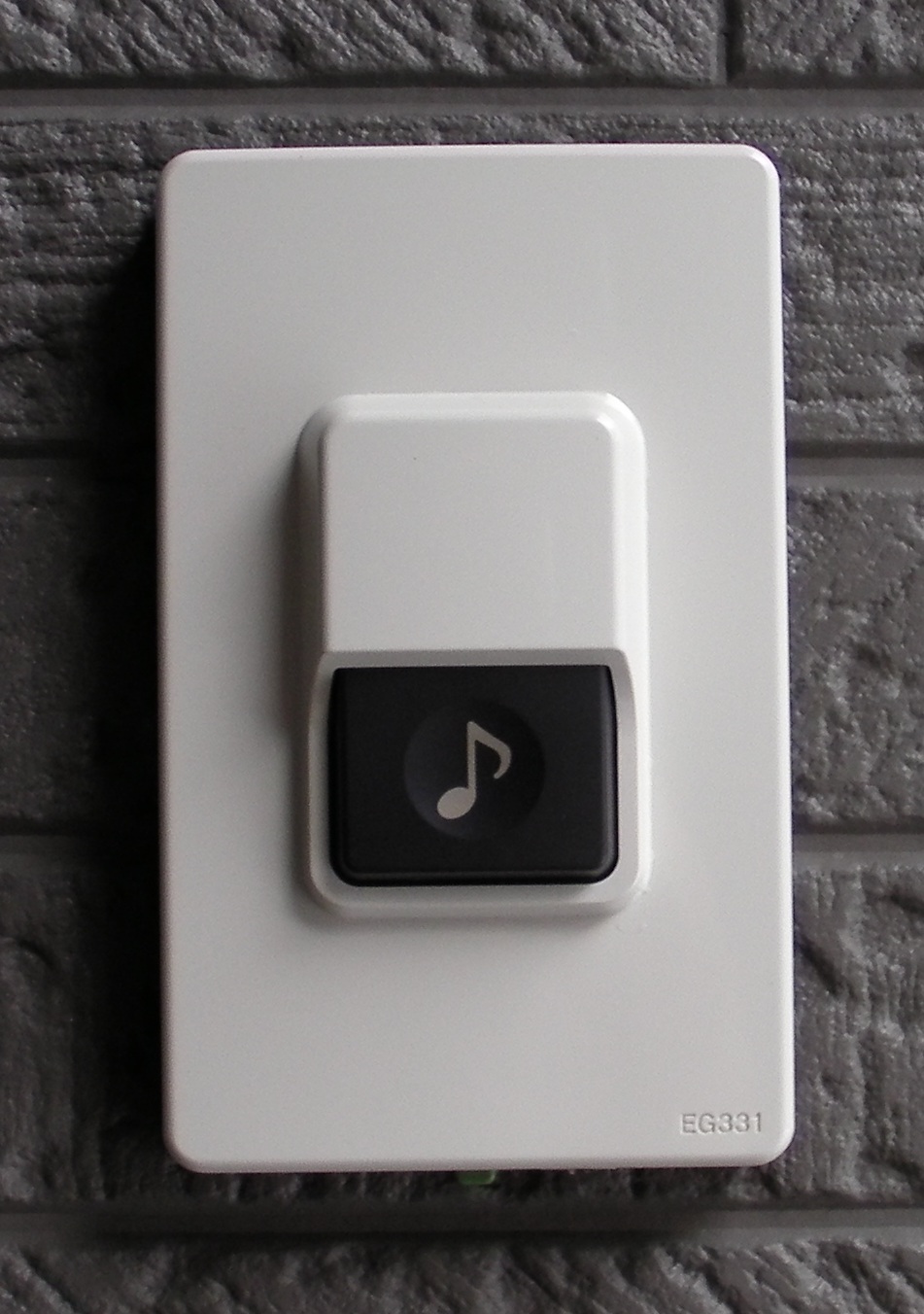
An old push button and a working chime are useful clues. They do not tell you the voltage or capacity of the transformer, or whether the new doorbell is compatible with that chime. Send the installer a photo of the closed button and the chime, and give them the model you want to buy. If an existing transformer label is easy to see without opening anything, include it too. Leave any checks inside equipment or near mains wiring to the electrician.
Work out how you want to hear visitors. If the doorbell only notifies a phone, ask what happens when that phone is elsewhere or its notifications are muted. Check whether an indoor chime is included, available separately or compatible with equipment already fitted. If several people need alerts, check whether they can each have their own access.
Think about the ordinary week
A battery model can save cable work at the front door. The trade-off is access for charging. Ask how the battery is removed or charged and whether the doorbell stays available while it is charging. A heavily used entrance or a view with frequent movement can affect battery life depending on the model and settings. Make sure the mounting position can be reached safely from ground level if you will need to handle the unit regularly.
For a wired model, the electrician will need a route between the supply and the door. An existing cable may be usable after checking. A new route could be straightforward through an adjacent hallway cupboard or awkward around a tiled porch and finished wall. Ask where any power supply will sit and how it will be reached later. Mention that you want the internal cable to be concealed if the appearance is important.
Stand where the camera would go
Check which way visitors approach and whether the door recess hides their face from the likely position. Look at what falls behind them. The ICO advises people to aim cameras away from neighbours' property, public spaces and shared areas where possible. If your camera captures images or audio beyond your boundary, check the ICO's guidance on the rules that apply. In a block of flats, also ask about permission before fixing anything to a communal entrance or filming a shared corridor.
Check that the Wi-Fi reaches the door with it shut. You can use your phone for a rough indication, although that will not guarantee the doorbell works in the same position. Look up what the model does if the connection drops and whether it needs a subscription for the features you want. Take a photo of the doorway from outside and one from inside. Those views, the model number and how you want to hear the chime are enough to start discussing the installation.
Send Wallington Electrical Services the doorbell model and a photo showing the doorway from inside and out. We can discuss where the cable and power supply might go before any drilling or decorating is planned.