
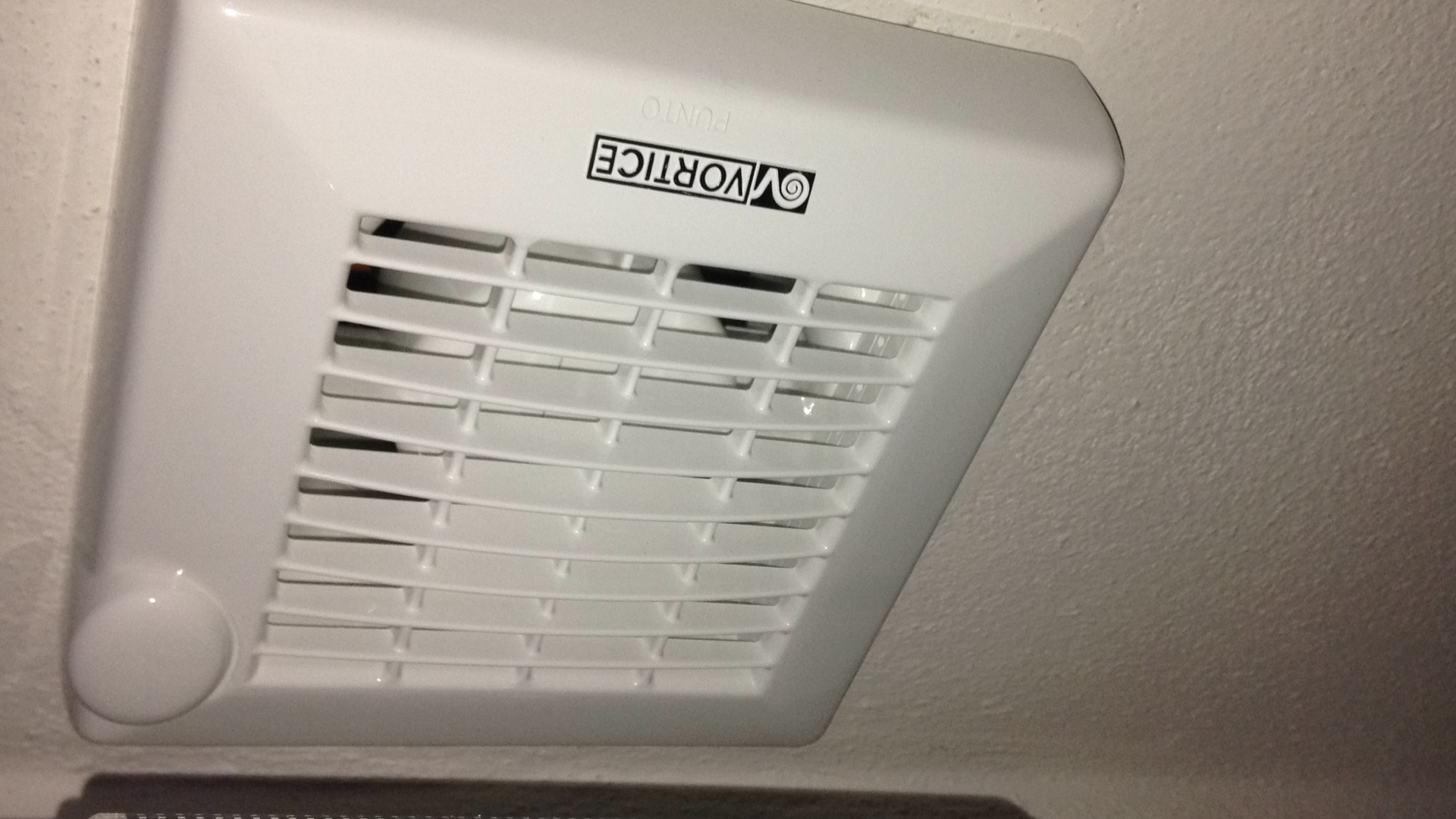
Air fans · CC BY-SA 4.0

A quiet extractor fan is easier to live with, especially beside a bedroom. But the quietest product on a shelf is not necessarily the right fan for your bathroom. It also needs to move air through the actual route to outside, with controls that suit the room and its users.
Look at the route as well as the fan
A short route through an outside wall is different from a longer duct passing through a ceiling space. Bends, restrictions and the outlet arrangement can affect performance. Tell the installer where the existing fan discharges and show any accessible information about the duct, rather than assuming a new front cover solves the problem.
The proposed fan should be selected for the installation. Ask how its performance will be checked once fitted. A quoted airflow or noise figure from product literature describes particular test conditions; it does not by itself demonstrate the result in your bathroom.
Make the controls suit daily use
Think about who uses the bathroom and when. A fan linked to the light, a humidity-responsive control or another arrangement may suit different circumstances. Ask what starts the fan, what stops it and what the user needs to do.
If someone repeatedly turns it off because it is noisy or confusing, the control arrangement deserves attention. A clear handover is useful: know which settings you can adjust and which controls should be left to the installer. Avoid changing internal wiring or dismantling equipment to investigate it yourself.
Air needs a way in
Extraction depends on replacement air reaching the room. The wider ventilation arrangement and the path through the home matter, not only the motor in the bathroom. Changes to doors, flooring or draught-proofing can be relevant, so mention recent building work during the assessment.
Government ventilation guidance explains the importance of effective air exchange in managing moisture. Keep intentional ventilation openings working as intended. If the room is difficult to ventilate, ask for a whole arrangement to be assessed rather than repeatedly buying a more powerful fan.
Coordinate with the bathroom design
Fan position, electrical requirements, ducting and maintenance access need planning before ceilings and tiles are finished. The installer must select equipment suitable for its location. Do not choose the position solely because it looks symmetrical beside the lights.
Discuss appearance after the practical requirements are understood. There may be different ways to achieve an acceptable result, but a concealed arrangement should still be accessible for maintenance. Ask how it is cleaned and what will happen when a component needs replacement.
Give useful information when asking for help
Describe whether the problem is noise, lingering moisture, unreliable operation or all three. Note when it happens and whether anything has changed. Photographs of the room and fan can help an initial discussion, although performance needs more than a photograph to assess.
Wallington Electrical Services can review the fan and agreed electrical work, with wider building or damp issues referred appropriately. The aim is a bathroom that is comfortable to use and a ventilation arrangement people understand, rather than a quiet specification that fails to solve the practical problem.